


Introduction
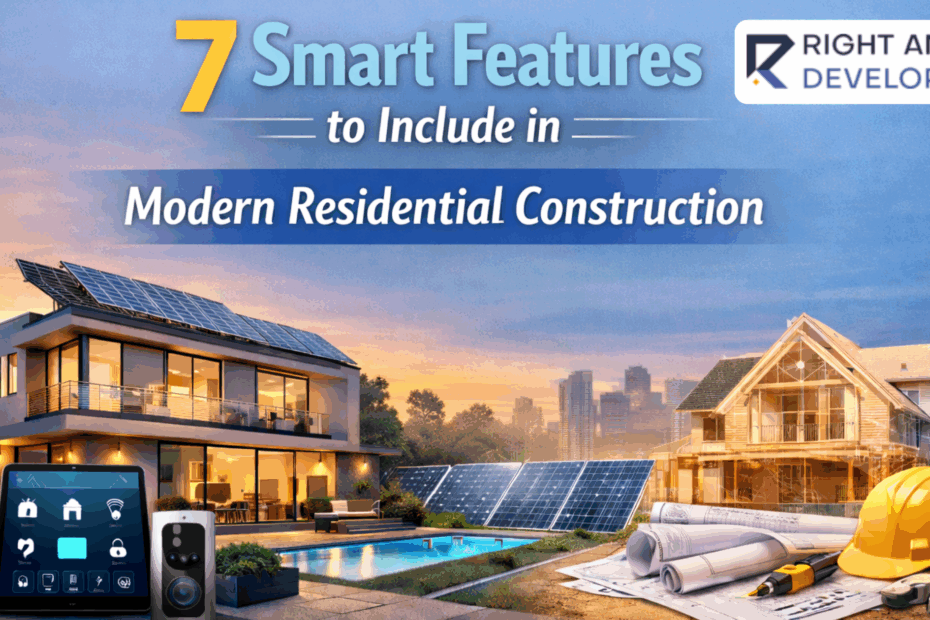
Building a modern home is no longer limited to strong walls and attractive designs. Today’s homeowners expect comfort, efficiency, safety, and long-term value from their living spaces. Careful planning during the early stages of construction avoids future modifications and unnecessary expenses. Working with a professional residential construction company helps select the right design elements, materials, and systems that support modern lifestyles. The following seven smart features play a major role in creating a practical, efficient, and future-ready home.
Building a modern home is no longer limited to strong walls and attractive designs. Today’s homeowners expect comfort, efficiency, safety, and long-term value from their living spaces. Careful planning during the early stages of construction avoids future modifications and unnecessary expenses. Working with a professional residential construction company helps select the right design elements, materials, and systems that support modern lifestyles. The following seven smart features play a major role in creating a practical, efficient, and future-ready home.
Why Smart Planning Matters in Modern Homes?
Modern residential construction focuses on functionality and aesthetics. Smart features improve daily convenience, reduce utility costs, and increase property value over time. When these elements are planned during construction, installation becomes easier and more cost-effective.
Modern residential construction focuses on functionality and aesthetics. Smart features improve daily convenience, reduce utility costs, and increase property value over time. When these elements are planned during construction, installation becomes easier and more cost-effective.
1. Smart Home Automation Systems
Home automation is one of the most important features in modern homes. Smart lighting, climate control, and appliance management systems allow homeowners to control their houses using mobile apps or voice commands. Motion sensors and timers reduce electricity usage by switching off devices when not in use. This feature adds convenience while supporting efficient energy management.
Home automation is one of the most important features in modern homes. Smart lighting, climate control, and appliance management systems allow homeowners to control their houses using mobile apps or voice commands. Motion sensors and timers reduce electricity usage by switching off devices when not in use. This feature adds convenience while supporting efficient energy management.
2. Energy-Efficient Design and Natural Ventilation
Energy efficiency begins with proper architectural planning. Positioning windows, cross-ventilation, and natural lighting reduce artificial cooling and lighting. Insulated walls, energy-saving glass, and LED fixtures further improve efficiency. A skilled residential construction company can recommend layouts and materials that suit local weather conditions and lower long-term energy costs.
Energy efficiency begins with proper architectural planning. Positioning windows, cross-ventilation, and natural lighting reduce artificial cooling and lighting. Insulated walls, energy-saving glass, and LED fixtures further improve efficiency. A skilled residential construction company can recommend layouts and materials that suit local weather conditions and lower long-term energy costs.
3. Advanced Security and Safety Systems
Safety is a major concern for homeowners. Modern residential construction includes digital door locks, video doorbells, CCTV cameras, and motion detection systems. These features allow homeowners to monitor their properties remotely through smartphones. Additional elements such as proper outdoor lighting, secure boundary walls, and alarm systems provide extra protection.
Safety is a major concern for homeowners. Modern residential construction includes digital door locks, video doorbells, CCTV cameras, and motion detection systems. These features allow homeowners to monitor their properties remotely through smartphones. Additional elements such as proper outdoor lighting, secure boundary walls, and alarm systems provide extra protection.
4. Flexible and Multi-Functional Living Spaces
Lifestyle needs are changing, especially with remote work and online learning becoming more common. Home today requires flexible spaces that serve multiple purposes. A room can function as a home office, study area, or guest bedroom when required. Open floor plans, sliding partitions, and modular layouts help homeowners adapt their spaces without structural changes.
Lifestyle needs are changing, especially with remote work and online learning becoming more common. Home today requires flexible spaces that serve multiple purposes. A room can function as a home office, study area, or guest bedroom when required. Open floor plans, sliding partitions, and modular layouts help homeowners adapt their spaces without structural changes.
5. Water Management and Conservation Systems
Water conservation is becoming an essential part of residential planning. Rainwater harvesting systems, underground storage tanks, and efficient plumbing layouts reduce water wastage. Low-flow fixtures and proper drainage systems support responsible water use. These features also provide reliable backup during water shortages in urban areas.
Water conservation is becoming an essential part of residential planning. Rainwater harvesting systems, underground storage tanks, and efficient plumbing layouts reduce water wastage. Low-flow fixtures and proper drainage systems support responsible water use. These features also provide reliable backup during water shortages in urban areas.
6. Smart Kitchen and Utility Planning
The kitchen is one of the most used spaces in a home. Modern construction focuses on functional layouts, modular storage, and designated appliance spaces. Proper ventilation, durable countertops, and easy-clean materials make the kitchen more practical. Separate utility areas for laundry and storage help keep living spaces organized and clutter-free.
The kitchen is one of the most used spaces in a home. Modern construction focuses on functional layouts, modular storage, and designated appliance spaces. Proper ventilation, durable countertops, and easy-clean materials make the kitchen more practical. Separate utility areas for laundry and storage help keep living spaces organized and clutter-free.
7. Durable and Low-Maintenance Materials
Choosing high-quality materials is a smart investment in residential construction. Weather-resistant paint, anti-skid flooring, moisture-resistant doors, and termite-proof alternatives reduce maintenance needs over time. Quality waterproofing and durable roofing protect the structure from environmental damage. Consulting professionals during material selection helps homeowners choose options that provide strength and long-term reliability.
Choosing high-quality materials is a smart investment in residential construction. Weather-resistant paint, anti-skid flooring, moisture-resistant doors, and termite-proof alternatives reduce maintenance needs over time. Quality waterproofing and durable roofing protect the structure from environmental damage. Consulting professionals during material selection helps homeowners choose options that provide strength and long-term reliability.
Additional Considerations for Future-Ready Homes
Solar Power Integration
Installing solar panels during construction reduces installation costs and generates renewable energy. Solar water heaters and rooftop panels lower electricity expenses and support environmentally responsible living.
Installing solar panels during construction reduces installation costs and generates renewable energy. Solar water heaters and rooftop panels lower electricity expenses and support environmentally responsible living.
Smart Storage and Space Optimization
Built-in wardrobes, loft storage, under-stair cabinets, and wall-mounted units help you maximize your space. Proper storage planning keeps the home organized and improves interior appearance.
Built-in wardrobes, loft storage, under-stair cabinets, and wall-mounted units help you maximize your space. Proper storage planning keeps the home organized and improves interior appearance.
Future Electrical and Network Planning
Modern homes require strong internet connectivity and multiple power points for devices and smart systems. Concealed wiring, structured network planning, and dedicated spaces for routers and control panels make the home ready for future technology upgrades.
Modern homes require strong internet connectivity and multiple power points for devices and smart systems. Concealed wiring, structured network planning, and dedicated spaces for routers and control panels make the home ready for future technology upgrades.
Conclusion:
Modern homes are designed to support comfort, efficiency, and long-term convenience. Smart automation, energy-saving layouts, advanced security, flexible spaces, water management systems, functional kitchens, and durable materials are the seven essential features that define today’s residential construction. Planning these elements during the building phase avoids future modifications and reduces maintenance costs. Working with an experienced residential construction company allows homeowners to make informed decisions and create a home that meets their current needs while remaining practical and valuable for years to come.
Modern homes are designed to support comfort, efficiency, and long-term convenience. Smart automation, energy-saving layouts, advanced security, flexible spaces, water management systems, functional kitchens, and durable materials are the seven essential features that define today’s residential construction. Planning these elements during the building phase avoids future modifications and reduces maintenance costs. Working with an experienced residential construction company allows homeowners to make informed decisions and create a home that meets their current needs while remaining practical and valuable for years to come.